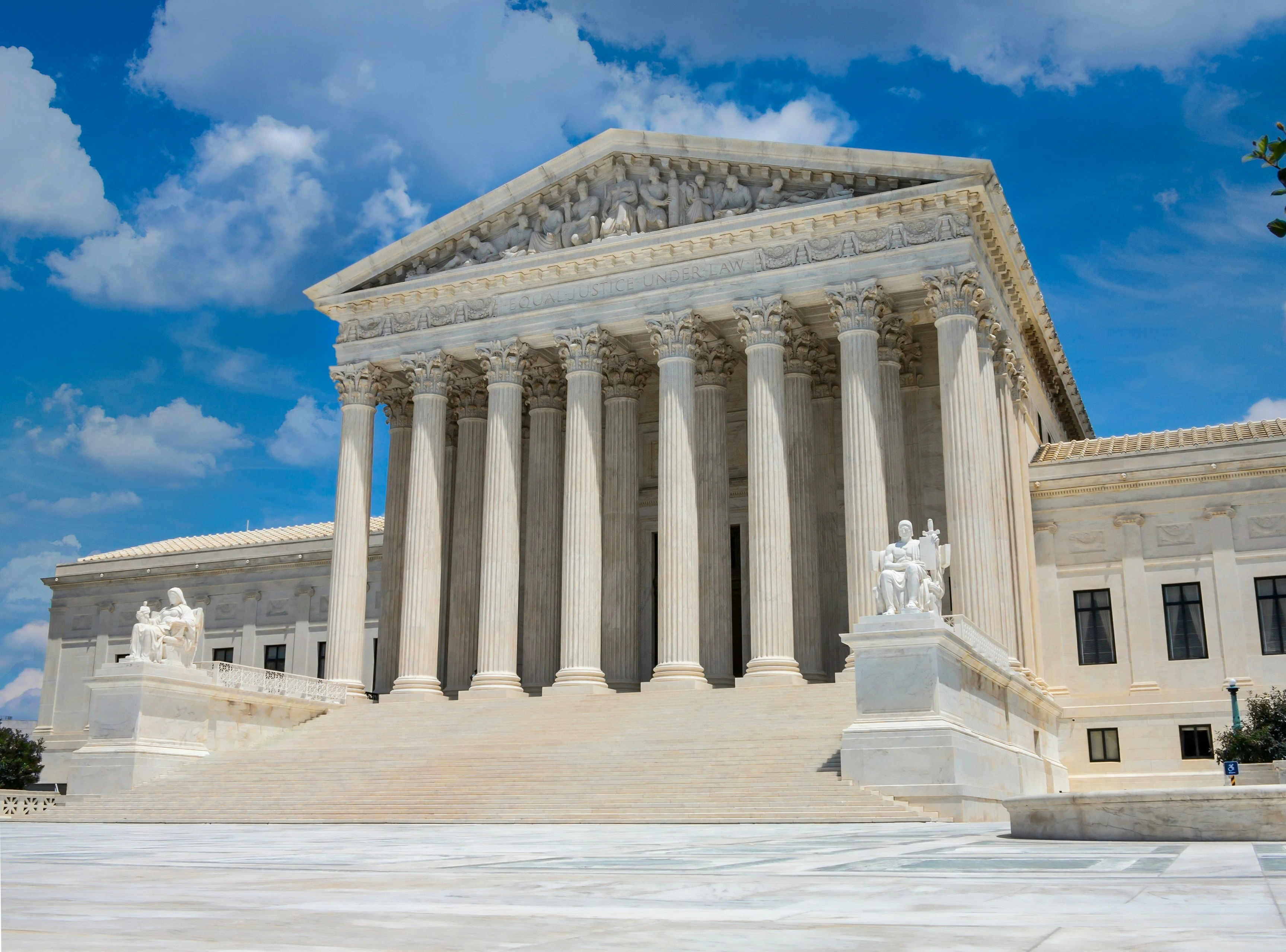
For most of its history, the Supreme Court’s emergency docket was a quiet corner of its work. Oftentimes, it was a place for stays of execution, scheduling disputes, and urgent procedural matters. Over the past decade, however, the use of the emergency docket has increased significantly. Meanwhile, the standards for what constitutes an “emergency” have loosened. The recent rise of illegitimate emergency docket use undermines the legitimacy of the Court because it complicates precedential guidance for lower courts due to its unclear precedential value. This trend also erodes fundamental principles of judicial transparency, since emergency cases do not require fully reasoned decisions.
Most cases are decided on the merits docket, which is the default docket. The merits docket features all the customary aspects of a Supreme Court case, including oral argument and full-length briefs from each party [1]. Once a merits decision is reached, a named vote is published along with a detailed explanation of the justices’ reasoning, including concurrences and dissents. By contrast, the non-merits docket, also known as the emergency, shadow, or interim docket is used less frequently. This docket is traditionally a procedural tool used only when the length of a merits case would cause harm to one or more parties. Typically, the shadow docket typically does not involve extensive briefing, oral argument, or fleshed-out decision publications [2]. Rather, decisions are issued with little explanation and can be handed down outside normal judicial hours (sometimes with less than a page of rationale) [3]. For example, the decision in the 2025 emergency docket case Social Security Administration v. American Federation of State, County, and Municipal Employees (2025), was decided in an unsigned, three-paragraph decision [4].
Because of the reduced transparency requirements for shadow docket decisions, the Court has specific tests for when this docket can be used. One consideration is whether there is a “fair prospect” that the case will succeed on the merits of the underlying claim [5]. The Court is also expected to consider whether the absence of preliminary relief results in "irreparable harm” during the litigation period [6]. For instance, injunctions against death penalty convictions are frequently granted on the emergency docket to prevent wrongful execution. The 2008 case Winter v. Natural Resources Defense Council, was granted an injunction on the Court’s emergency docket that established an additional test for emergency docket use looking at whether the balance of equities tilts in the plaintiff’s favor and whether an injunction would benefit the public interest [7][8]. These tests are designed to limit the use of the emergency docket to specific, clear, and urgent cases.
Due to the restricted nature of the emergency docket, federal applications to the Supreme Court’s emergency docket have historically been rare [9]. Under the George W. Bush Administration, just five applications were made, and under Obama, only three [9]. Since President Trump took office in 2017, federal applications to the Court have increased significantly. The first Trump Administration submitted 41 emergency applications, and the Biden Administration submitted 19 [10] [11]. As of October 2026, the second Trump Administration has submitted 44 emergency applications, exceeding the total from his first administration in just two years. This rise would not be so concerning if it were driven by genuine, pressing emergencies. However, the lack of an enforcement mechanism for the emergency docket tests means the Court can grant applications without rationale and regardless of their true urgency [12].
Many recent applications and decisions would not have met the “irreparable harm” test established before this administration. For example, Social Security Administration v. American Federation of State, County, and Municipal Employees (2025) was heard on the emergency docket. The case addressed whether the Department of Government Efficiency (DOGE) could access Social Security Administration (SSA) records [13]. The SSA granted the DOGE’s request to access comprehensive SSA records, giving DOGE highly sensitive personal information about Social Security recipients and employees. Two labor unions and the Alliance for Retired Americans (ARA) sued, and a district judge temporarily barred DOGE from accessing the records while the issue was litigated [14]. The Supreme Court granted the Administration’s emergency application and blocked the order. The injunction merely prevented efforts to “improve information-technology infrastructure and waste,” which is not irreparable harm [15]. While the case was properly litigated, DOGE workers would have remained employed on other projects and the data would have stayed protected. The injunction would not have caused permanent damage to either party. By accepting the case, the Court signaled that mere administrative obstacles to the presidential agenda can count as legal emergencies [16]. Future administrations could use this standard to functionally eliminate the judicial check on their power, as long as the majority sides with them. The unsigned, three-paragraph decision in SSA v. AFSCME is typical of how the shadow docket has recently operated: less scrutinous and less public than the merits process.
Trump v. Wilcox (2025) and Trump v. Slaughter (2025) both demonstrate how the emergency docket can be used to reshape the law before the Court has fully heard the question. In both cases, the Administration dismissed officials from protected positions at the National Labor Relations Board and the Federal Trade Commission without establishing cause, despite federal statutes that permit removal only for specified reasons [17] [18]. Lower courts, following the precedent set by Humphrey’s Executor v. United States (1935), ordered reinstatement [19]. However, the Administration applied to the Court’s emergency docket and was granted a stay of the lower court’s order, preventing the officials from staying in office while litigation continued. This departure from precedent violates the expectation that emergency docket decisions remain within precedent. In her Trump v. Wilcox dissent, Justice Kagan wrote that the emergency docket, “while fit for some things, should not be used to overrule or revise existing law” [20]. She added that “it is a wholly different thing to skip the usual appellate process when issuing an order that itself changes the law,” which captures the particular risk of rulings that depart from precedent without the transparency of a merits decision.
The problem compounded when the Court treated these emergency stays as binding precedent. In Trump v. Boyle (2025), the Court stayed the reinstatement of three Consumer Product Safety Commission members with the explanation that the case did not otherwise differ from Wilcox in any pertinent respect [21]. That sentence made an unsigned stay with little reasoning controlling in a separate case. The Solicitor General, nicknamed the “tenth justice,” pressed for the Trump v. Wilcox and Trump v. Slaughter stays to be treated as precedent in lower court cases as well, arguing that other courts must follow the Court’s application of the stay factors in “materially similar cases” [22]. The decision to use the emergency stay from Wilcox as precedent in Boyle demonstrates how temporary decisions, made without full briefing, argument, or published reasoning, can bind the lower courts across a whole category of cases.
The unclear precedent set by emergency docket decisions makes the rise of this type of decision potentially catastrophic. Because emergency decisions are intended to be temporary, it is illogical to treat them as precedent before full litigation, yet several have gathered enough subsequent citations to obscure their procedural origins [23]. Of the emergency decisions made since 2000, over half have been cited by at least one federal court. Since 2023, citations of emergency decisions have increased 63%. One factor behind this increase may be the trend set by the Supreme Court itself, which has cited over 10% of all emergency docket decisions in the last 25 years in its own decisions. The Court has also sent mixed signals about the weight of their emergency decisions. In Trump v. Boyle (2025), it ruled that “our interim orders are not conclusive as to the merits,” which suggests that it is wrong to cite them as precedent [24]. However, the Court also wrote that their emergency decisions should “inform how a court should exercise its equitable discretion in like cases.” Taken together, shadow docket decisions are now an unwieldy block of new jurisprudence on high-stakes issues with unclear precedential value.
Without full briefing, oral argument, or a public explanation of rationale, the norms restricting the emergency docket were the final line of defense protecting the rule of law from judicial overreach. The increased use of the docket, particularly in non-emergency cases, means the highest court in the country can functionally rule by decree. Due to the compounding precedential system of the U.S. Judicial system, a few emergency decision citations can inform thousands of future cases. Under today’s Court, emergency cases carry similar precedential value to a merits docket case, but none of the foundational due process and transparency requirements of healthy democracy. This is particularly concerning since many current emergency cases fail to even meet the traditional emergency standard. The recent disregard for judicial norms and precedential consequences threatens to erode the entire judicial system, undermining centuries of a complex, interconnected precedential system with hasty, poorly-reasoned decisions that should not carry precedent.